
| Protection against UV-A and UV-B rays | ||||||||||||||||||||||||||||
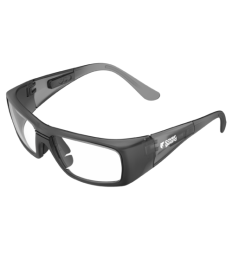
The decrease of the protective effect of the ozone layer implements that protection against the sun becomes more and more important. Effectively, the eyes (and our skin) are very sensible to high energy rays which exist in the ultraviolet (UV) spectre. Even in cloudy weather, the UV protection is essential because the clouds absorb visible light, but very little UV. The eyes are even more exposed when we are in mountains or in environments where the UV are reflected by snow, water, sand, reverberation from clear walls, windows or mirrors (for example: water reflect 5 to 10% of UV rays; sand 20%; snow 85%). Furthermore, in mountains, the quantity of received UV raises 10% every 1000 metres. This is why all our safety glasses LUX OPTICAL filters out 99.9% of UV rays Specificities Polarized lenses : polarized filters provide bigger comfort in zones with high reflexion level of light (buildings with mirror walls, water, light sand, snow…) and a better perception of the relief and contrasts. UV400 : an additional protection up to 400 nm against the blue light, which follows the ultraviolet (up to 380 nm) and is certified to protect 100% against UV rays. IR : the infrared rays follow the visible red light, but are invisible for human eyes and lead to a warming up of irradiated surfaces and bodies.
EN1836 lenses The lenses of sun shine glasses are made to protect the wearer against the dangerous action of sunlight rays. The European standard EN1836 classifies the lenses in 5 categories which are distinguished according to the percentage of light absorbed by the lens.
Attention All lenses from category 1 and over are unsuitable for driving at night. Lenses of category 4 are not suitable for traffic driving. The filtration of UV rays takes place inside the lens (mineral or organic). It is independent from the shade colour. | ||||||||||||||||||||||||||||